Moon habit tracker
Designing a self-initiated iOS app for habit and mood tracking, linking daily inputs to moon phases to reveal patterns and trends over time.
iOS APP
HABIT TRACKER
Role
Product Designer
Timeline
4 months
team
1 Engineer, me
platform
Web
Why we made this
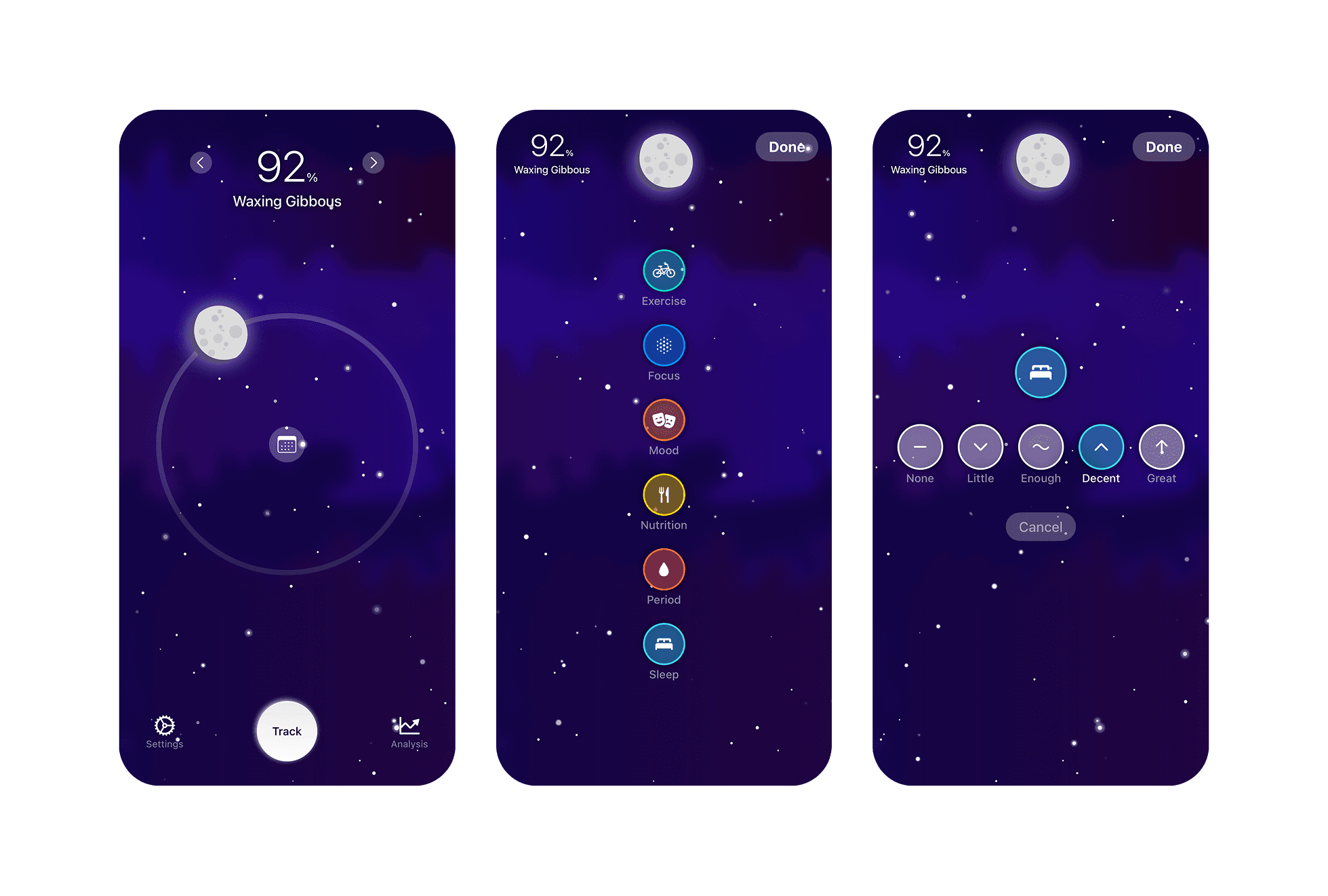
We wanted to design a habit tracker that felt more intuitive and emotional than clinical. Many existing apps felt rigid, like filling out a form. We were curious whether syncing mood tracking to something cyclical, like the moon, might encourage reflection over performance.
I worked on this project over 6 months together with a developer. I handled UX and UI, from early sketches and wireframes to interface design, usability testing, and refinement.
Process highlights
The initial idea started with hand-drawn sketches exploring metaphors like moon orbit, emotional rhythm, and daily habits. These translated into a circular navigation system for mood and date tracking.
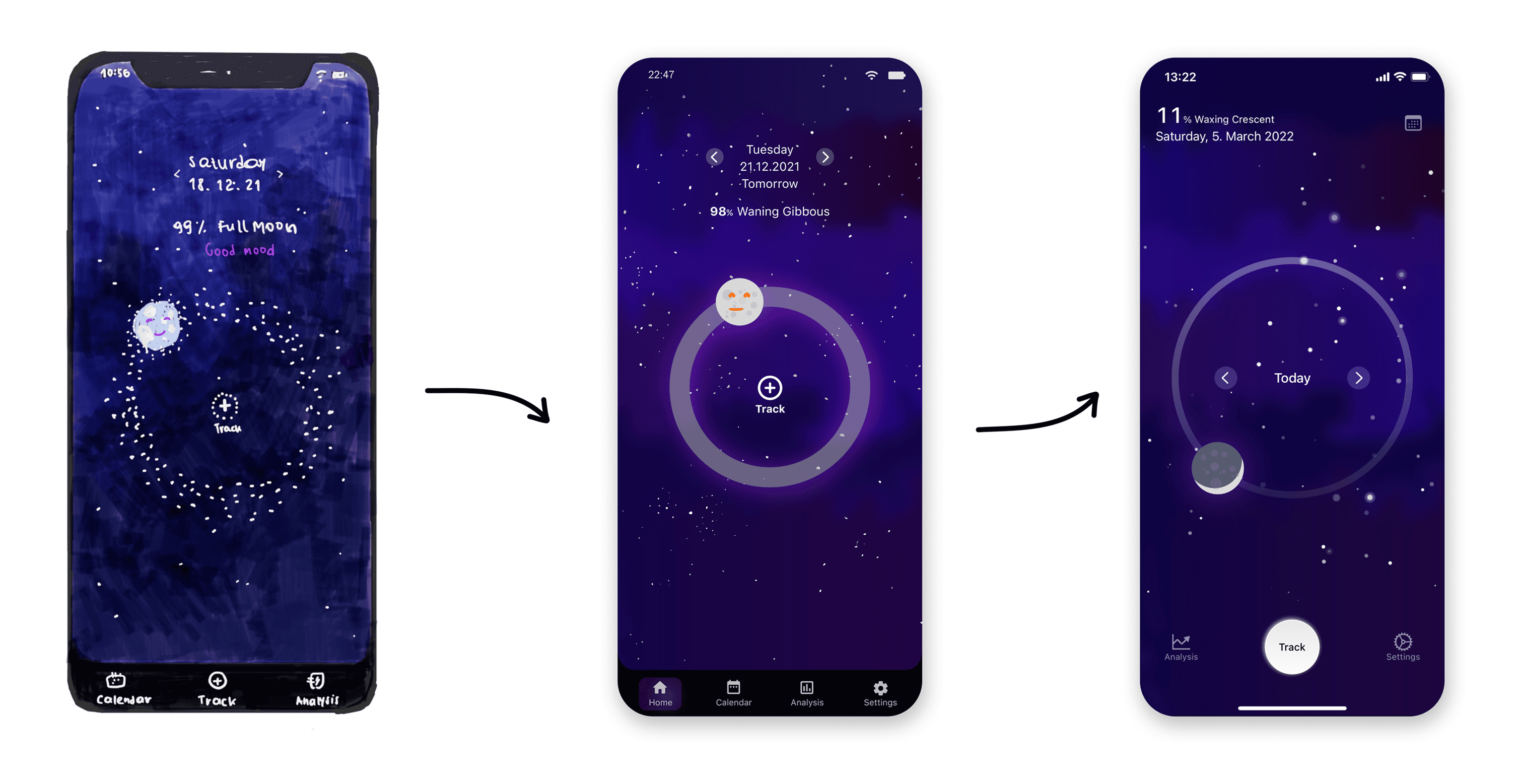
First interactive prototypes
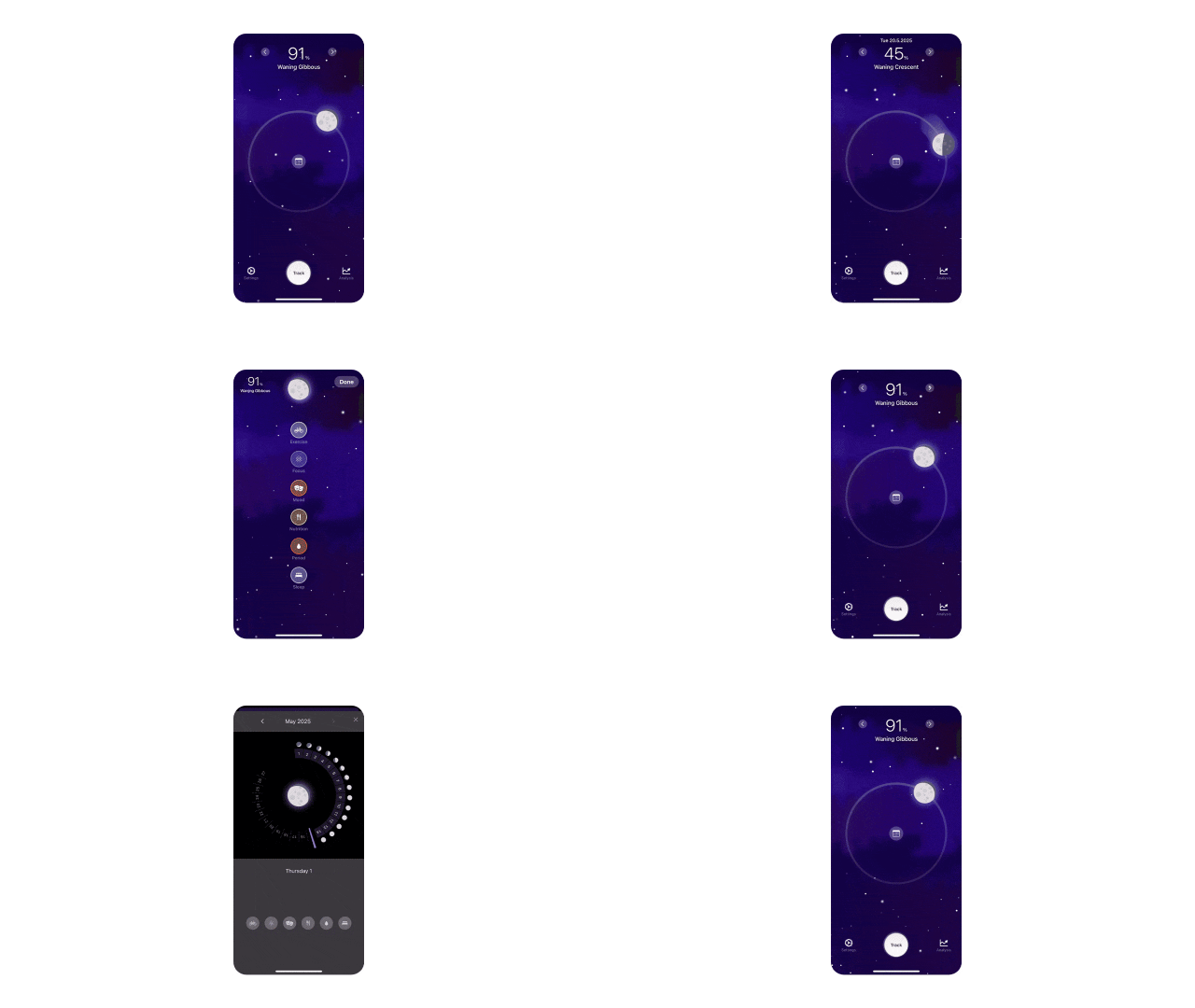
We built early prototypes to test the interface with friends and family. The app had three core views:
Home: shows current moon phase and a “track” button
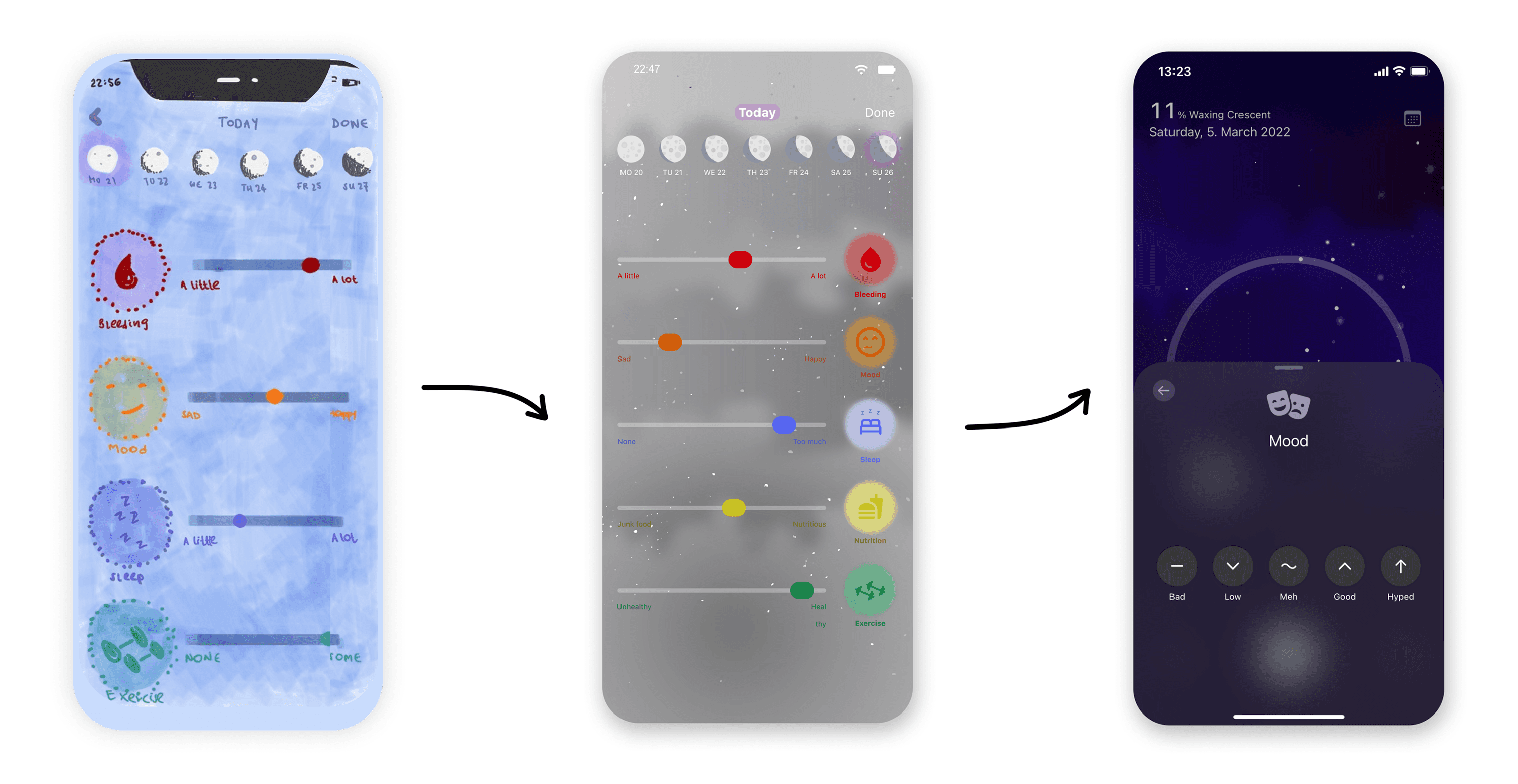
Track: sliders for mood, sleep, nutrition, etc.
Calendar: circular view of each month
What didn’t work
Initial tracking used slider ranges (e.g., “Sad → Happy”), but during testing, users hesitated. They didn’t know how much was “a little” or “a lot.” We replaced all ranges with qualitative input, simple mood icons like "meh" or "hyped", which made the app feel more friendly and less effortful.
Analysis Feature
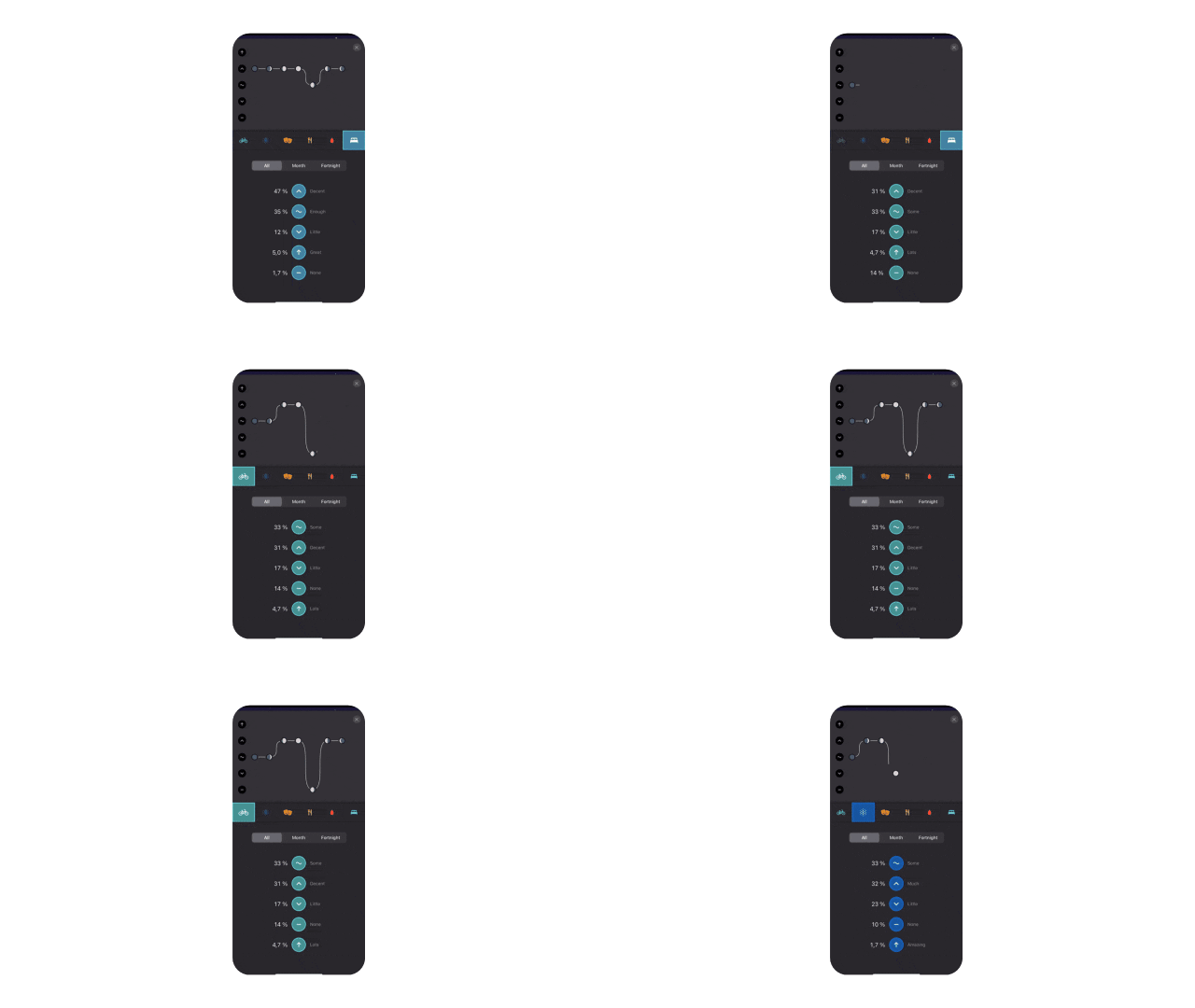
The analysis lets users explore how their tracked traits relate to moon phases. We designed a filterable chart view to highlight patterns across time. The feature turns personal data into simple insights, encouraging users to stay curious and engaged with their own patterns.
What I learned
Sometimes people don’t want precision, they want something that feels natural. Replacing sliders with simple choices actually increased usage. Also designing for reflection is different than designing for action.