Price Radar
Designing a price alert system for gold and precious metal investors, enabling continuous tracking and informed decision-making.
Investment Product
E-commerce
Role
Product Designer
Timeline
3 months
team
2 Engineers, 1 PM, me
platform
Web (e-commerce)
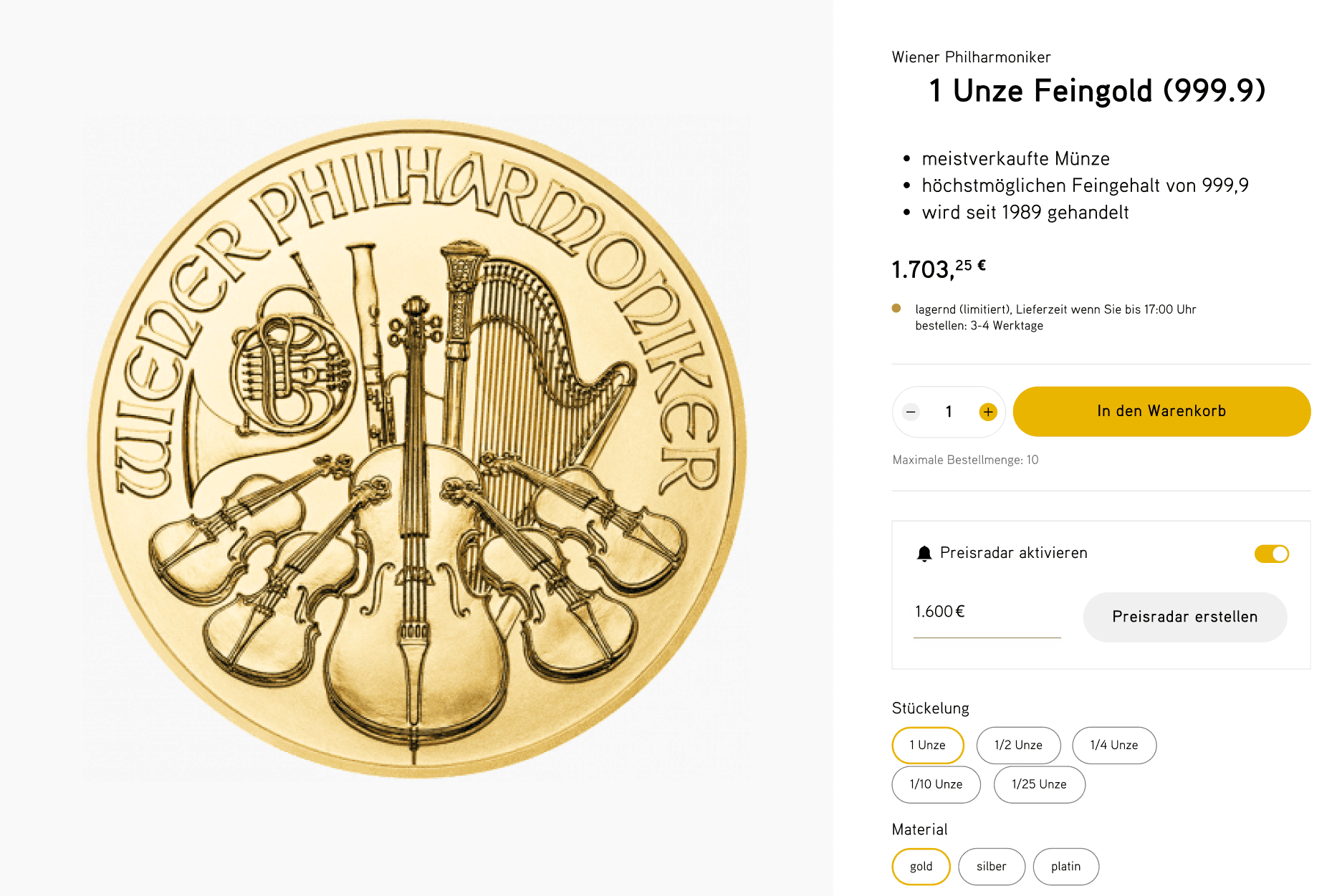
Gold prices change every 30 seconds. Users had no way to act on it.
Münze Österreich sells physical investment products, gold coins, bars, and silver. Prices update with the market in near real-time, but users had to manually check prices and decide when to buy. The business wanted a price-alert feature to increase return visits and conversions. But in a regulated financial context, the design had to avoid feeling like a trading app or promotional push.
Key Insight
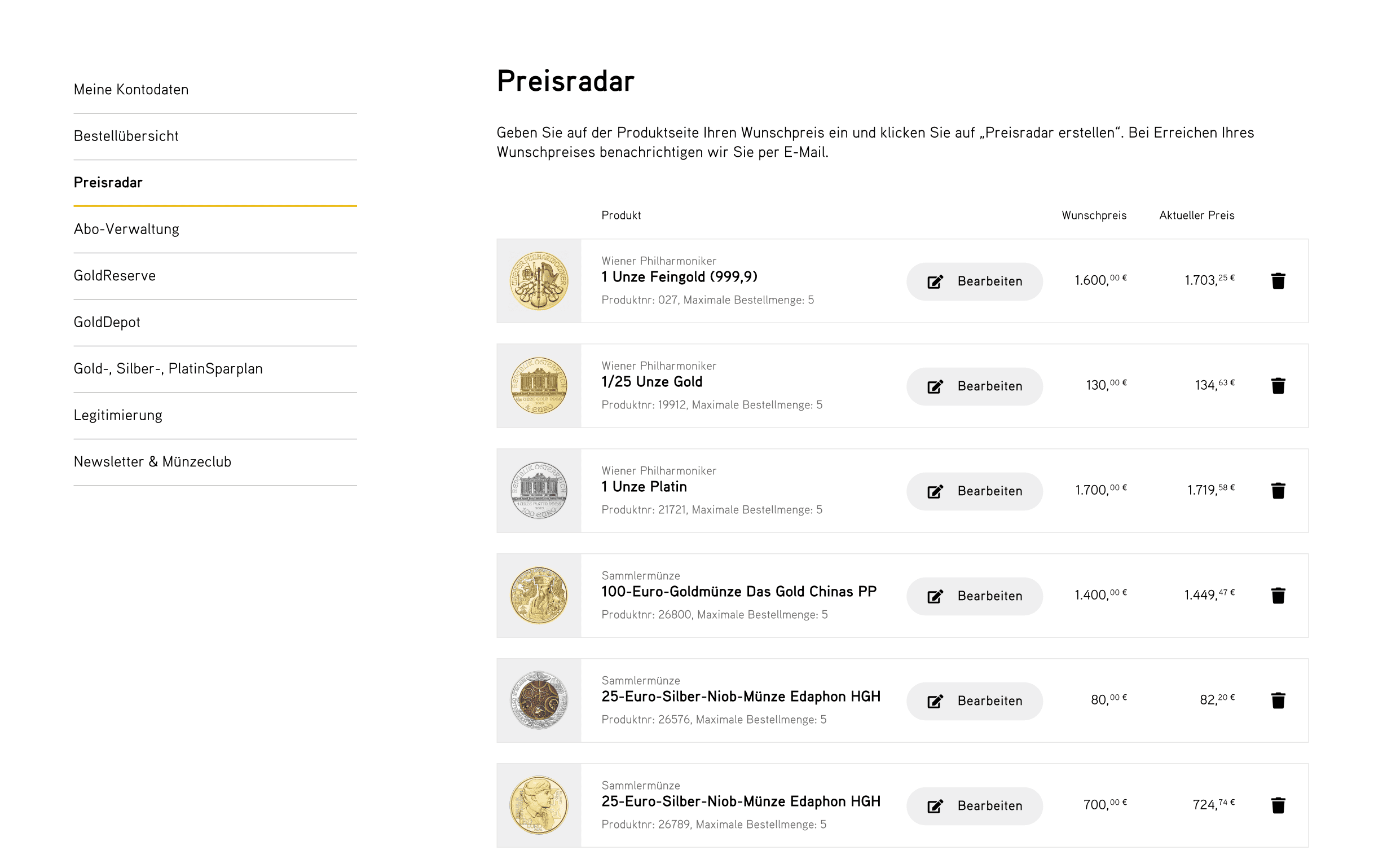
I tested the setup flow, interaction model, notification behavior, and naming with young first-time investors, occasional buyers, and experienced investors. Across all user types, the expectation was consistent: this is not a trading tool, but a way to keep an eye on prices.
Users preferred a simple, visual way to set a target price and rejected anything that felt push-driven or promotional. Even the naming mattered — “Preisradar” was perceived as calm and observational, while “Preisalarm” felt loud and sales-oriented.
“Preisalarm sounds like an ad shouting at me about a sale. It feels loud and promotional.” — Test participant, first-time investor
This shifted the feature from prompting action to supporting quiet, ongoing monitoring.
Three design decisions that reduced friction
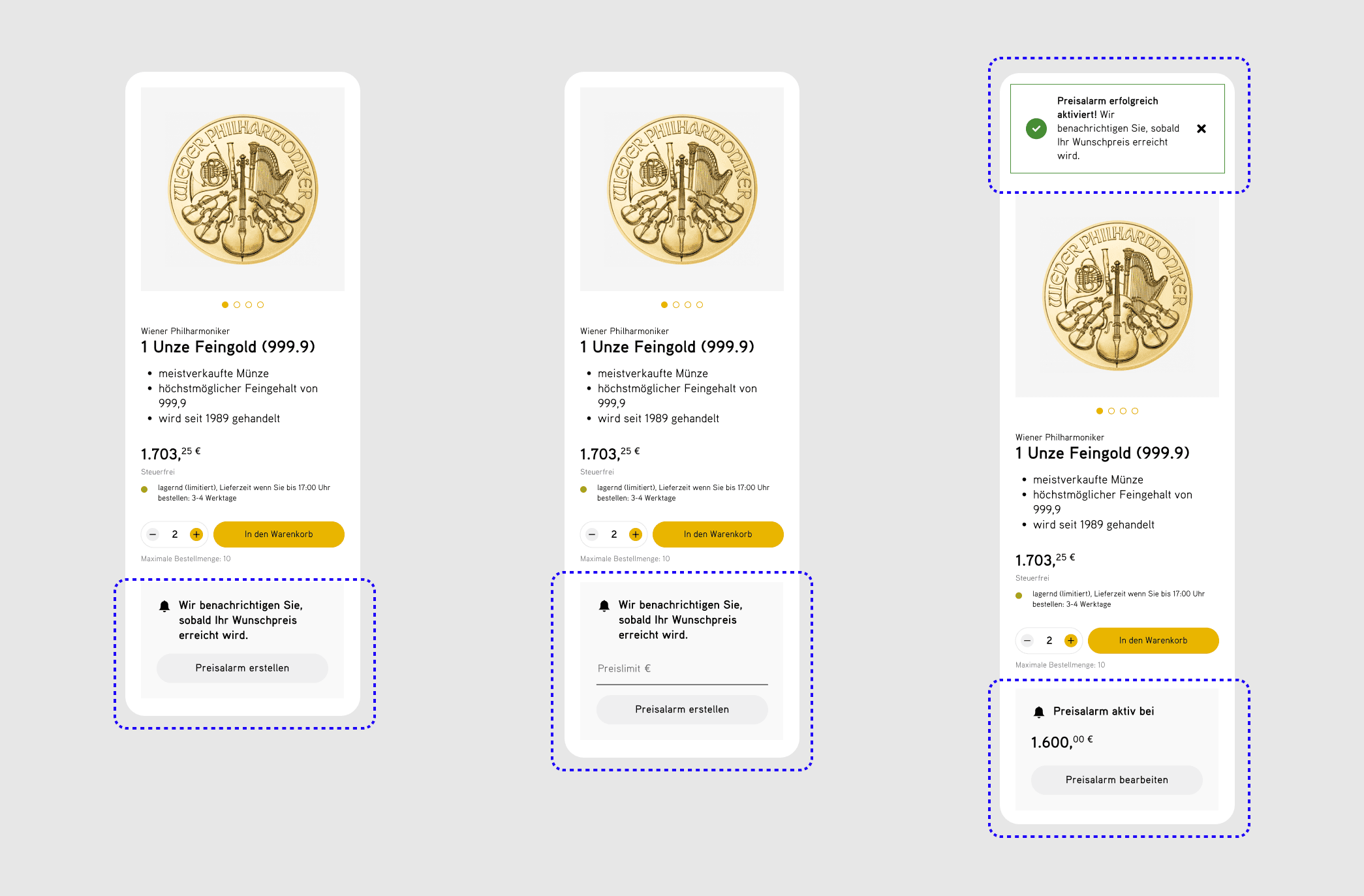
The feature had to integrate into an existing e-commerce product page without feeling bolted on. Every interaction was designed to lower the activation barrier.
Toggle on the product page: The entry point is a toggle switch placed next to the main CTA. When toggled on, the user enters a desired price.
Inline confirmation banner: Once submitted, a confirmation message appears on the same page. The banner confirms the alert is active with the set price.
One notification, then deactivate: When a target price is hit, one email is sent with product details, current and target price, and a direct link. Then the alert auto-deactivates. Users can re-enable with one click.
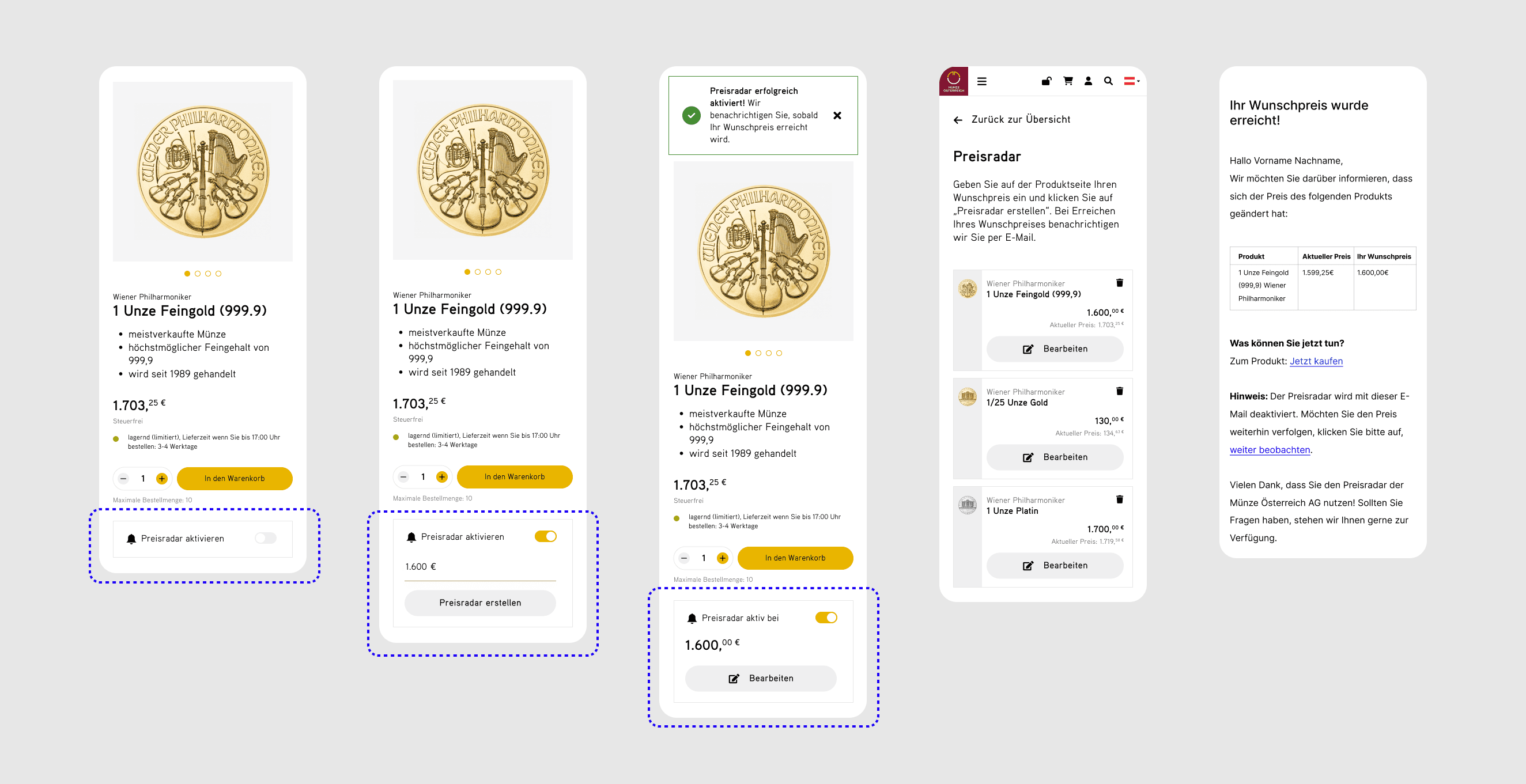
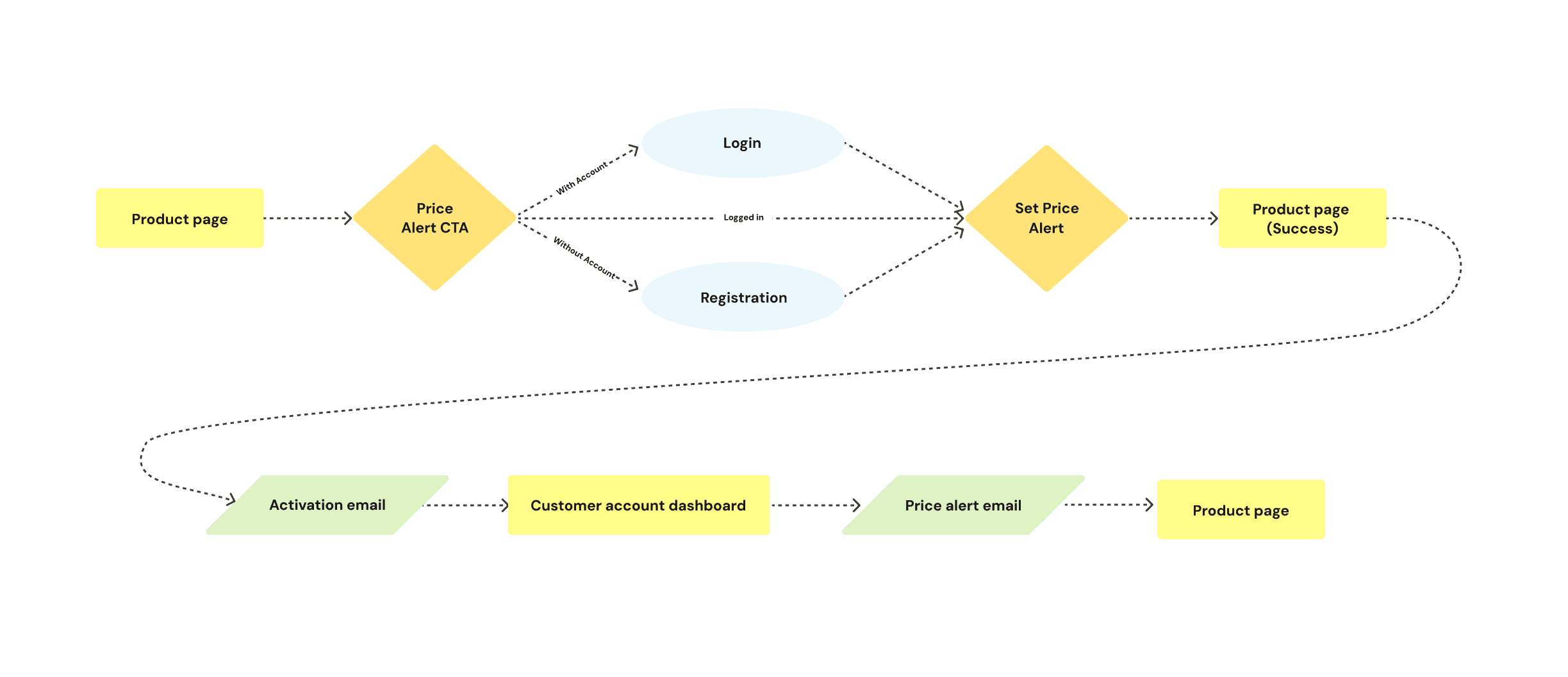
One feature, four integration points
The alert wasn't a standalone widget, it needed to work across the product page, email notifications, and account management. I mapped the full system to ensure every state and edge case was accounted for.
Measured outcomes
+18% increase in returning users
+12% conversion uplift
~30% feature adoption rate among product page visitors
What I learned
The biggest design decision was renaming the feature based on how users felt about it. "Preisradar" shipped because I tested early, listened to perception, and let a research insight reshape the product's framing.
Starting with user needs, designing across the full system and making trade-offs that balance business goals with user trust was the way to go. The one-notification-then-deactivate model drove a 12% conversion uplift because it respected users instead of pushing them.
What I’d do differently
One thing I’d add is a small price-history sparkline directly next to the toggle. During Iteration 2, several participants asked some version of: “Has the price been below €1,600 recently?” The missing context wasn’t the alert itself, but whether the target price actually felt realistic. We didn’t have enough time to design and validate the sparkline component before launch, but it became one of the most requested features in post-launch feedback.
I’d also include at least one usability session with a screen reader user. While the toggle pattern itself followed established accessibility conventions, my accessibility handoff was based on research and best practices rather than direct testing. In retrospect, validating the interaction with real assistive technology usage would have strengthened the final solution.